%20(1)-1.jpg)
March 8 to June 17 / 2026
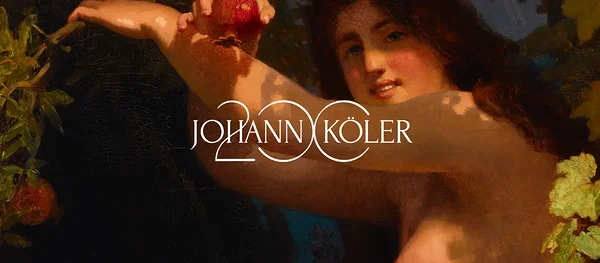
IN THE YEAR MARKING THE 200th ANNIVERSARY OF JOHANN KÖLER’S BIRTH,
three exhibition venues in Viljandi present a connected programme. At the Kondas
Centre, visitors can see original works by the classic master; the Viljandi Museum
displays one hundred full-scale reproductions of his paintings; and at Rüki Gallery,
five contemporary Estonian artists reinterpret Köler’s well-known works from
a present-day perspective.
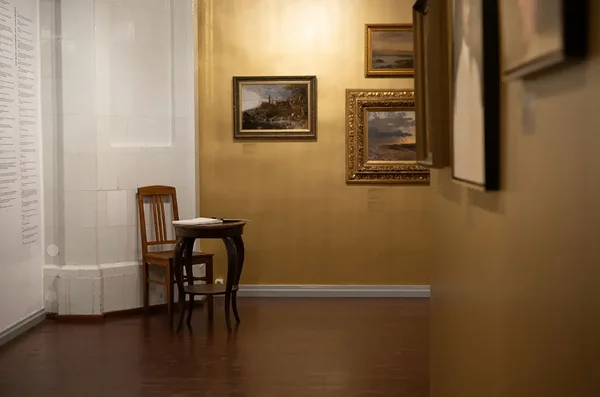
The exhibition at the Kondas Centre offers a cross-section of Johann Köler’s
artistic production, from his formative years at the Imperial Academy of Arts
in St Petersburg to later works of personal and social significance. More than
thirty works are on display, representing different techniques, genres and stages of
completion. The earliest date from his student years at the academy, when the artist’s
drawing skills and academic sense of form were established – qualities that remained
characteristic of his work throughout his life.
The exhibition also includes works from Köler’s Italian period (1858–1862),
which marked an important turning point in his career. While living in Rome,
he mastered the technique of watercolour and encountered the artistic traditions
of Southern Europe at first hand. This experience broadened his sense of colour and
introduced greater lightness and a more sensitive treatment of light into his work.
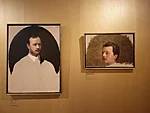
Köler’s oeuvre encompasses several genres. Portraiture occupies a prominent
place, bringing him recognition in St Petersburg and securing his livelihood. He
painted statesmen, cultural figures and intellectuals, establishing himself as a highly
regarded portraitist. Alongside this, he also worked with historical painting and
religious compositions – a genre regarded in academic art education as a measure
of an artist’s mastery. Among these works is the fresco Come Unto Me (1879) in the
apse of St Charles’ Church in Tallinn, one of the few works by Köler widely known
to Estonians during his lifetime. The Kondas Centre displays the large preparatory
sketch created for this fresco.
The sketches and studies selected for the exhibition also highlight Köler’s interest
in Estonian subject matter. Several of them date from the early 1860s, when, after
returning from Italy, he spent time in Estonia and maintained active contact with
figures of the national awakening. Works created in his homeland testify to his
interest in local life, types of people and the natural landscape.
In his landscape paintings – particularly views of Crimea and Nice – light and
atmosphere play a central role. During his travels in Crimea in the 1870s, the artist
was captivated by its grand scenery, which reminded him of Italy. Expansive views
of sky and sea, together with a soft palette, combine the artist’s personal travel
experiences with the tradition of classical landscape painting.
Köler also turned to literary and mythological compositions, which were popular
subjects in the exhibitions and salons of the late nineteenth century. In these works
he responded to the tastes of his time while maintaining the compositional clarity
and balance characteristic of academic art.
The exhibition unfolds in a somewhat different manner than viewers may
be accustomed to: rather than presenting a large, comprehensive overview, it
offers a more intimate encounter with the artist’s work. It is especially fitting that
the exhibition takes place in Viljandi – a place with which Johann Köler himself
identified as an artist, often adding the name “Wiliandi” in brackets next to
his signature.
Special thanks are due to the Köler scholar Mai Levin, whose writings have been
an invaluable source in introducing the artist’s works.
Mari Vallikivi



IN THE YEAR MARKING THE 200th ANNIVERSARY OF JOHANN KÖLER’S BIRTH,
three exhibition venues in Viljandi present a connected programme. At the Kondas
Centre, visitors can see original works by the classic master; the Viljandi Museum
displays one hundred full-scale reproductions of his paintings; and at Rüki Gallery,
five contemporary Estonian artists reinterpret Köler’s well-known works from
a present-day perspective.
The exhibition at the Kondas Centre offers a cross-section of Johann Köler’s
artistic production, from his formative years at the Imperial Academy of Arts
in St Petersburg to later works of personal and social significance. More than
thirty works are on display, representing different techniques, genres and stages of
completion. The earliest date from his student years at the academy, when the artist’s
drawing skills and academic sense of form were established – qualities that remained
characteristic of his work throughout his life.
The exhibition also includes works from Köler’s Italian period (1858–1862),
which marked an important turning point in his career. While living in Rome,
he mastered the technique of watercolour and encountered the artistic traditions
of Southern Europe at first hand. This experience broadened his sense of colour and
introduced greater lightness and a more sensitive treatment of light into his work.
Köler’s oeuvre encompasses several genres. Portraiture occupies a prominent
place, bringing him recognition in St Petersburg and securing his livelihood. He
painted statesmen, cultural figures and intellectuals, establishing himself as a highly
regarded portraitist. Alongside this, he also worked with historical painting and
religious compositions – a genre regarded in academic art education as a measure
of an artist’s mastery. Among these works is the fresco Come Unto Me (1879) in the
apse of St Charles’ Church in Tallinn, one of the few works by Köler widely known
to Estonians during his lifetime. The Kondas Centre displays the large preparatory
sketch created for this fresco.
The sketches and studies selected for the exhibition also highlight Köler’s interest
in Estonian subject matter. Several of them date from the early 1860s, when, after
returning from Italy, he spent time in Estonia and maintained active contact with
figures of the national awakening. Works created in his homeland testify to his
interest in local life, types of people and the natural landscape.
In his landscape paintings – particularly views of Crimea and Nice – light and
atmosphere play a central role. During his travels in Crimea in the 1870s, the artist
was captivated by its grand scenery, which reminded him of Italy. Expansive views
of sky and sea, together with a soft palette, combine the artist’s personal travel
experiences with the tradition of classical landscape painting.
Köler also turned to literary and mythological compositions, which were popular
subjects in the exhibitions and salons of the late nineteenth century. In these works
he responded to the tastes of his time while maintaining the compositional clarity
and balance characteristic of academic art.
The exhibition unfolds in a somewhat different manner than viewers may
be accustomed to: rather than presenting a large, comprehensive overview, it
offers a more intimate encounter with the artist’s work. It is especially fitting that
the exhibition takes place in Viljandi – a place with which Johann Köler himself
identified as an artist, often adding the name “Wiliandi” in brackets next to
his signature.
Special thanks are due to the Köler scholar Mai Levin, whose writings have been
an invaluable source in introducing the artist’s works.
Mari Vallikivi
Curator and exhibition design: Mari Vallikivi
Graphic design: Riina Uisk
Installation: Kaarel Narro, Meelis Tammemägi, Jüri Pillisner, Imre Toltsberg
The artworks and their stories: Eva Laantee Reintamm
Text editing: Tiina Sarv
Translation: Ann Kuslap
The works are from the collections of the Art Museum of Estonia, Tartu Art Museum, Viinistu Art Museum and a private collection
Acknowledgements: Liis-Marel Aak, Nele Ambos, Janar Fomatškin Ivar-Kristjan Hein, Sirje Helme, Mare Joonsalu, Liisa Kaljula, Kersti Kuldna, Mai Levin, Piret ja Sven Lõokene, Jaan Manitski, Alar Nurkse, Grete Ots, Katre Ratassepp, Tiiu Saadoja, Kristiina Tiideberg, Vilmar Toom
The exhibition is supported by the Estonian Cultural Endowment


